-Photoroom.avif)


THE COMPLETE GUIDE TO CONSTRUCTION TECHNOLOGY (CONTECH) — 2026 EDITION
A practical overview of the digital tools, robotics, BIM, reality capture, AI, and automation shaping modern construction.

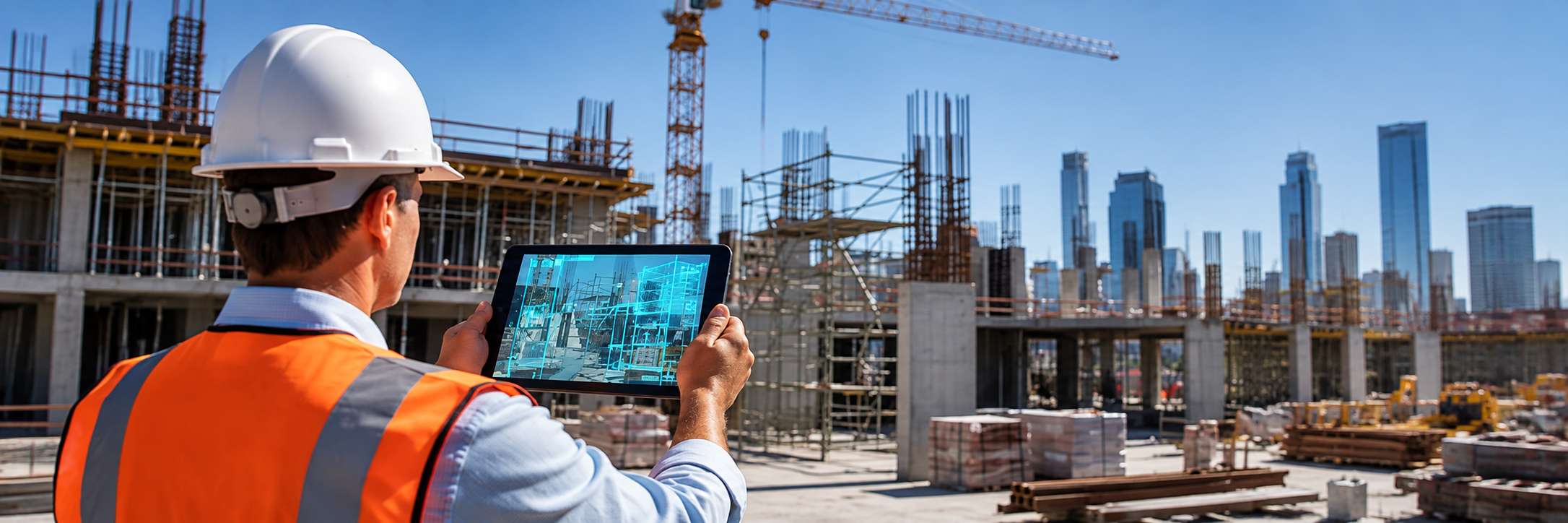
A Comprehensive Overview of Digital Tools, Robotics, Automation, BIM, Layout Systems, Reality Capture, IoT, AI, Modular Construction, and Digital Twins
Introduction to CONSTRUCTION TECHNOLOGY
Construction Technology (“ConTech”) represents the integration of digital tools, automation systems, robotics, scanning technologies, connected platforms, and advanced materials into the modern building process. As project complexity increases and labor shortages persist, construction professionals are turning to technology to improve accuracy, reduce rework, increase productivity, enhance safety, and deliver projects more predictably.
ConTech now plays a critical role across every phase of a project:
- Design & Planning
- Estimating & Scheduling
- Field Layout & Installation
- Reality Capture & Quality Assurance
- Project Management & Collaboration
- Safety Monitoring & Operations
- Facility Management & Digital Twin Integration
This guide consolidates insights from leading industry sources, academic research (including Texas A&M’s Construction Science program), and real-world ConTech implementations to provide the most comprehensive, vendor-neutral resource on construction technology available today.
1. BUILDING INFORMATION MODELING (BIM) & DIGITAL DESIGN
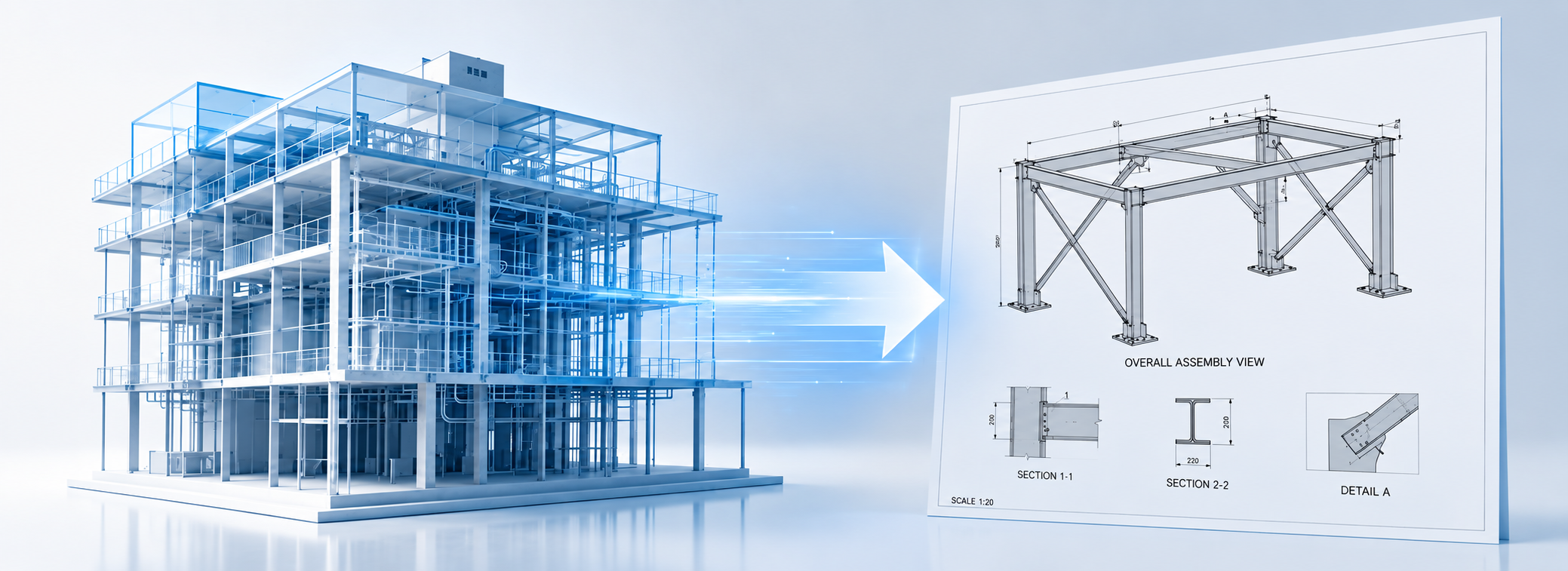
Building Information Modeling (BIM) is the foundation of digital construction and the core environment through which today’s buildings are designed, coordinated, analyzed, and delivered. Far beyond simple 3D visualization, BIM is a centralized data model that integrates geometry, materials, specifications, equipment details, installation methods, scheduling, costs, safety information, and long-term facilities data. Every element in a BIM model carries intelligence—dimensions, metadata, manufacturer specs, sequencing logic, and maintenance requirements—creating a digital representation of the building that evolves throughout the project lifecycle.
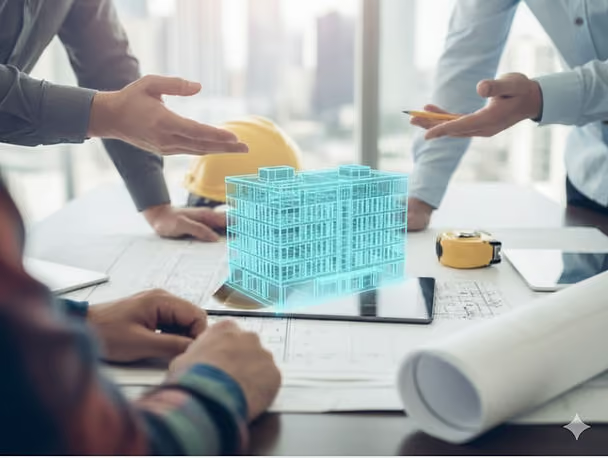
Modern BIM workflows transform how teams collaborate. Architects, engineers, contractors, fabricators, and owners contribute to and work from a federated model, ensuring that decisions are made with complete and coordinated information. Weekly coordination sessions revolve around resolving clashes, validating constructability, and planning installation sequences long before crews arrive on site. BIM also supports downstream workflows such as automated layout, prefabrication, quantity takeoffs, visualization for stakeholder communication, and integration with scheduling and costing tools (4D and 5D BIM).
For contractors especially, BIM has become a strategic tool for reducing risk and increasing predictability. Accurate models drive better procurement planning, clearer scope definition, fewer RFIs, and earlier detection of conflicts that would otherwise lead to delays and rework. As owners increasingly require BIM deliverables for facility operations, BIM also plays a growing role in digital twins and lifecycle management—ensuring buildings can be operated, maintained, and renovated with reliable, data-rich digital records.
Examples of BIM Platforms
- Autodesk Revit / BIM 360 / ACC
- Trimble Tekla Structures
- Graphisoft ArchiCAD
Key Capabilities
- Clash detection & multi-trade coordination
- 4D scheduling (model + time)
- 5D cost modeling (model + cost)
- Model-based quantity takeoffs
- Logistics planning (cranes, laydown areas, access paths)
- Fabrication-ready shop drawings
- Facility management and asset modeling
- Integration with digital layout, scanning, and robotics
Additional Use Cases
- Visual simulation of construction phasing
- AR view of construction models
- Risk analysis through model-based planning
- Automatic generation of field layout points
- Coordination workflows for highly dense MEP zones
- Early detection of constructability issues
- Parametric design optimization
Pros
- Reduces design conflicts and rework
- Improves communication across trades
- Enhances planning accuracy
- Supports prefabrication and modular workflows
- Serves as the “single source of truth”
- Enables digital twin creation
Cons / Challenges
- Requires skilled BIM technicians and modelers
- Interoperability varies between software platforms
- High coordination effort early in the project
- Models must be updated regularly to remain reliable
- Some trade partners still work predominantly in 2D
2. DIGITAL LAYOUT TECHNOLOGIES (LASER LAYOUT, TOTAL STATIONS, ROBOTIC LAYOUT)
Digital layout technologies automate one of the most fundamental and error-prone tasks in construction: transferring design intent onto the jobsite. Instead of relying on tape measures, chalk lines, manual triangulation, or individual interpretation of drawings, these systems read directly from BIM or CAD and project or print layout points, lines, symbols, and elevations with a level of accuracy and consistency that manual methods simply cannot match.
Digital layout tools include robotic total stations (RTS), automated layout robots, and advanced laser projection systems. Together, they help crews establish control lines, wall locations, penetrations, hangers, sleeve locations, equipment pads, and complex geometries with unmatched precision. Because the information comes straight from the coordinated model, layout work becomes model-driven rather than interpretation-driven, aligning the field with design intent and minimizing disputes between trades.
Texas A&M research highlights that misinterpretation of drawings and manual measuring errors are among the top contributors to rework in the commercial building sector. Digital layout dramatically mitigates these risks by providing a consistent, repeatable workflow that is not dependent on individual skill levels or subjective reading of plans. The benefits are particularly significant in MEP-heavy spaces, tight coordination zones, tenant improvement work, and projects with complex geometry such as labs, hospitals, data centers, and industrial facilities.
In addition to improving accuracy, digital layout tools accelerate production. Crews can layout thousands of points in a fraction of the time required by manual methods, often completing in hours what used to take days. Automated layout also supports prefabrication workflows, ensuring that on-site conditions match the precise dimensions used to fabricate offsite components. As coordination levels increase and BIM-to-field integrations become standard practice, digital layout technologies are quickly becoming foundational tools for quality, efficiency, and risk reduction in modern construction.
The Laser Layout Tool for construction
Types of Digital Layout Technologies
Robotic Total Stations (RTS)
Used for precise point layout based on coordinated models.
Examples:
- Trimble Robotic Total Stations — https://construction.trimble.com
- Leica iCON — https://leica-geosystems.com
Laser Projection Layout Systems
Systems that project BIM-based information onto floors, walls, or ceilings.
Example:
Additional Use Cases
- Complex curved and radius walls
- High-density MEP hanger point coordination
- Prefab module placement
- Room-in-room assemblies
- Multi-level elevation control
- Rapid tenant improvement work
- Healthcare and lab projects requiring extremely tight tolerances
Pros
- 2×–4× faster layout
- Consistent results regardless of crew experience
- Reduces dependency on specialized layout foremen
- Aligns field installation with BIM
- Ideal for MEP, drywall, framing, and interiors
Cons / Challenges
- Requires accurate BIM/CAD inputs
- Some tools are limited to slab surfaces
- Outdoor performance varies with sunlight
- Requires digital workflow adoption by field teams
3. REALITY CAPTURE & 3D SCANNING
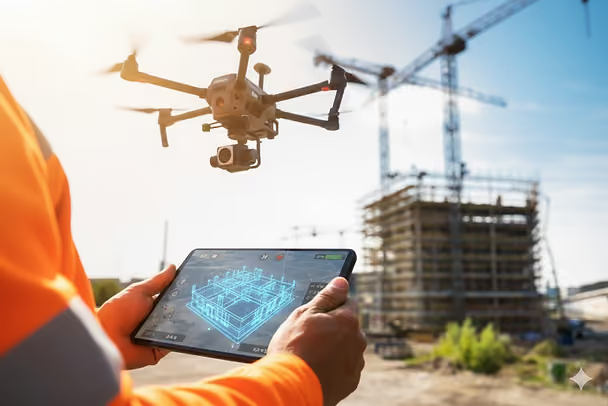
Reality capture technologies—LiDAR scanners, drones, SLAM-based mobile mappers, and 360° photo platforms—create precise digital representations of the jobsite, allowing teams to compare actual field conditions with design models at every stage of construction. By transforming physical environments into measurable data, these tools provide an objective, time-stamped record of progress, quality, and installed work.
According to FARO, reality capture significantly enhances MEP coordination by exposing installation deviations early, before they become costly rework or inspection failures. High-accuracy scans allow contractors to confirm embed locations, verify rebar configurations, check pipe routing, document above-ceiling work, and validate clearances in mechanical rooms—all with millimeter-level precision. Drones expand these capabilities to the exterior, delivering aerial maps, volumetric stockpile measurements, topographic updates, and site logistics insights.
SLAM-based mobile scanners and 360° photo documentation platforms add speed and accessibility, enabling teams to capture thousands of square feet in minutes. These systems automate progress monitoring, streamline punchlist workflows, support pay applications, and simplify communication with owners or remote stakeholders.
By integrating captured data with BIM, project management software, and digital twins, reality capture creates a continuous feedback loop—ensuring that design intent, field execution, and project documentation remain aligned. This reduces uncertainty, prevents errors, accelerates decision-making, and provides a reliable digital trail for QA/QC, commissioning, and facility turnover.
Types of Reality Capture Technologies
High-Accuracy LiDAR Scanners
Companies:
- Faro Technologies — https://www.faro.com
- Leica BLK — https://leica-geosystems.com
Ideal for mechanical rooms, industrial projects, renovation, and as-built documentation.
Mobile SLAM Scanning (Walkthrough Scanners)
Companies:
- NavVis — https://www.navvis.com
- Leica BLK2GO — https://leica-geosystems.com
Ideal for fast interior mapping and progress tracking.
Drone Photogrammetry
DroneDeploy reports that drone mapping saves time, improves safety, and enhances accuracy in earthwork and site management.
Companies:
- DroneDeploy — https://www.dronedeploy.com
- Datumate DatuBIM — https://datumate.com
360° Photo Documentation
Companies:
- OpenSpace — https://www.openspace.ai
- HoloBuilder — https://www.holobuilder.com
Provides full visual documentation at every construction stage.
Additional Use Cases
- Pre-pour verification (rebar, embeds, sleeves)
- Progress billing documentation
- Clash avoidance using model vs. field comparison
- Renovation projects with poor documentation
- QC verification for prefabricated modules
- Creating digital twins for facility management
- Remote site monitoring and inspections
Pros
- Objective, time-stamped field documentation
- Faster QA/QC cycles
- Reduces disputes and rework
- Enhances owner transparency
- Enables precise as-built modeling
Cons
- Data-heavy workflows requiring strong storage solutions
- Requires skill to register and align scans
- Photogrammetry depends on lighting and texture
- High-end equipment can be expensive
4. CONSTRUCTION ROBOTICS & AUTOMATION
Construction robotics are rapidly gaining adoption as contractors face increasing pressure to build faster, safer, and with greater consistency. Labor shortages, rising project complexity, and tighter schedules have pushed the industry to seek automation for tasks that are repetitive, physically demanding, or require high precision. According to Standard Bots, robotic systems can dramatically reduce manual labor, improve repeatability, and deliver consistent results regardless of crew size or experience levels.
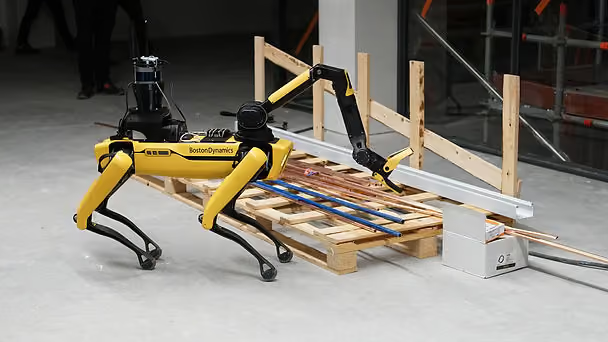
Modern construction robots take many forms, from autonomous earthmoving systems and layout-printing robots to drywall finishing machines and robotic arms used for drilling, painting, or welding. These solutions not only speed up production but also create safer working conditions by removing workers from dangerous or ergonomically stressful activities. Robots equipped with cameras, LiDAR, and advanced sensors can also collect valuable progress and quality data as they work, feeding real-time insights into project management and BIM workflows.
Robotics is particularly impactful in large-scale, high-repetition environments like warehouses, data centers, and manufacturing plants, as well as in tasks that require precision—such as layout, rebar tying, or finishing. As technology continues to improve and jobsite connectivity increases, robotics is shifting from experimental pilots to practical tools that enhance productivity and extend the capabilities of the existing workforce.
Examples of Robotic Systems
- Built Robotics — autonomous earthmoving
- TyBot — automated rebar tying
- Canvas — robotic drywall finishing
- Dusty Robotics — automated floor layout
Types of Construction Robots
Autonomous Heavy Equipment
- Excavators
- Dozers
- Graders
- Compactors
Task-Specific Robots
- Rebar tying
- Drywall taping
- Painting
- Drilling
- Layout printing
Inspection Robots (Quadrupeds)
Used for repetitive scanning, hazard assessment, and remote inspections.
Additional Use Cases
- Large repetitive concrete work
- Multi-acre warehouse layouts
- Deep excavations requiring precision
- Slab finishing and grinding
- Hazard detection in confined spaces
- High-rise construction with repetitive units
Pros
- Improves safety by reducing human exposure
- High repeatability and accuracy
- Reduces fatigue and strain injuries
- Enhances productivity with smaller crews
- Ideal for repetitive or precise tasks
Cons
- Requires structured, uncluttered environments
- High initial cost
- Maintenance and charging needs
- Requires digital ecosystem integration (models, layout data, connectivity)
5. PREFABRICATION, MODULAR CONSTRUCTION & 3D PRINTING
Prefabrication and modular construction move significant portions of work from unpredictable jobsites into controlled, manufacturing-style environments. This shift allows contractors to build components with higher precision, tighter quality control, and more predictable timelines. Instead of assembling everything onsite, large portions of a building—walls, MEP racks, bathroom pods, or even entire rooms—are produced offsite and delivered ready for installation.
Rethinking The Future identifies industrialized construction as one of the most disruptive forces in the AEC industry, driven by the need for greater efficiency, reduced labor dependence, and improved project certainty. When combined with BIM-driven design (DfMA), prefabrication ensures components are coordinated early in the process, minimizing clashes and rework once modules arrive on site.
3D printing adds another layer of innovation, using automated extrusion systems to create building components or entire structures with reduced waste and accelerated timelines. This approach is especially promising for affordable housing, rapid-deployment structures, and complex architectural forms that are expensive to produce with traditional methods.
Overall, industrialized construction offers faster schedules, improved safety, higher quality, and less waste—making it increasingly attractive for hospitals, hotels, housing, data centers, and other projects with repetitive, standardized elements.
Types of Industrialized Construction
Volumetric Modular
Factory-built complete rooms:
- Hotels
- Dormitories
- Hospital patient rooms
- Residential units
Panelized Systems
- Exterior wall panels
- Interior partitions
- Light-gauge steel assemblies
MEP Modular Racks
- Multi-trade assemblies
- Overhead corridor racks
- Vertical risers
3D Printing
3D printed structures are especially effective for rapid housing, disaster recovery, and low-cost residential.
Companies:
- ICON 3D Printing — https://www.iconbuild.com
- Vantis Modular — https://vantismodular.com
Additional Use Cases
- Data centers
- Healthcare and labs
- Education and student housing
- Industrial facilities requiring repeatable units
- Affordable housing initiatives
Advantages
- Faster schedules
- Higher quality control
- Less waste and rework
- Fewer workers needed on site
- Safer working environments
- Predictable outcomes
Challenges
- Prefab requires precise BIM and layout
- Transportation and craning logistics
- Longer preconstruction time
- Limited flexibility for design changes
- Manufacturing partners must coordinate closely
6. CONSTRUCTION MANAGEMENT SOFTWARE (CMS) & CONNECTED PLATFORMS
Construction Management Software (CMS) serves as the digital backbone of modern construction operations, centralizing communication, documentation, scheduling, financial control, and field coordination in one connected ecosystem. These platforms replace fragmented spreadsheets, paper forms, email chains, and siloed applications with a unified system that keeps every stakeholder aligned in real time.
CMS tools streamline day-to-day project management by managing RFIs, submittals, change orders, drawings, inspections, and daily logs—ensuring that office and field teams always work from the latest information. Integrated scheduling and cost modules allow project managers to connect progress, labor hours, and material usage directly to budgets and forecasts, improving financial visibility and reducing the risk of overruns.
Modern connected platforms also enable mobile collaboration. Field crews can upload photos, mark up drawings, report issues, track time, and complete quality or safety checklists directly from their phones or tablets, even offline. At the same time, dashboards give executives, owners, and superintendents instant insight into project health, risk areas, and schedule performance.
By centralizing workflows, ensuring data accuracy, and connecting teams across every phase of construction, CMS platforms help contractors deliver projects more efficiently, reduce administrative burden, and make faster, more informed decisions.
Key Features
- Project Planning & Scheduling
- Document Management
- Financial & Cost Management
- Field Reporting & Daily Logs
- Quality & Safety Management
- Real-time Analytics & Dashboards
- BIM Integration
- Mobile Workforce Tools
Leading Software Platforms
- Procore — https://www.procore.com
- Autodesk Construction Cloud — https://www.autodesk.com
- Buildertrend
- Oracle Construction & Engineering (Primavera)
- CMiC
- Raken
Additional Use Cases
- Digital RFIs & submittal management
- Live as-built drawing updates
- Punchlist resolution with photos
- Mobile time cards & workforce tracking
- Daily progress documentation
- Issue tracking with integrated photos or scans
- Analytics for schedule health and cost performance
Pros
- Eliminates document confusion
- Improves communication between office and field
- Centralized project data
- Enhances accountability
- Supports remote and distributed teams
Cons
- Requires training and adoption culture
- Subscription cost increases with usage
- Inconsistent usage between subcontractors
- Device management (rugged tablets, connectivity) required
7. IOT SENSORS, JOBSITE MONITORING & WEARABLE TECHNOLOGY
IoT sensors and wearable devices turn traditional jobsites into connected, real-time environments where safety, equipment usage, and site conditions are continuously monitored. Environmental sensors track temperature, humidity, dust, vibration, and noise—alerting teams instantly when conditions become unsafe or threaten materials. GPS and RFID tags monitor the location and utilization of tools, equipment, and materials, reducing theft and downtime.
Wearable devices extend this visibility to workers. Smart helmets, vests, and badges detect falls, track proximity to hazards, monitor vital signs for heat stress or fatigue, and help enforce restricted zones through geofencing. Together, IoT sensors and wearables provide real-time insights that improve safety, support predictive maintenance, streamline logistics, and create a more proactive approach to risk management on the jobsite.
IoT Sensor Applications
Environmental Monitoring
Sensors detect:
- Air quality (dust, gas)
- Temperature
- Humidity
- Noise
- Vibration
Asset & Equipment Tracking
Using:
- GPS tags
- RFID tags
- Bluetooth beacons
Predictive Maintenance
Equipment sensors track:
- Engine temperature
- Oil pressure
- Vibration
- Hydraulic performance
Security & Access Control
- Smart cameras
- Biometric access
- Motion detectors
Progress Monitoring
- Drone-based monitoring
- Smart camera analysis
- Weather-based scheduling adjustments
Wearable Technology Applications
- Fall detection
- Vital signs monitoring
- Heat stress alerts
- Proximity warnings near heavy machinery
- Ergonomic posture correction
- PPE compliance verification
- example :Triax Technology https://www.triaxtec.com
Key Benefits
- Real-time safety intelligence
- Reduced theft and downtime
- Predictive equipment maintenance
- Automated compliance documentation
- Better resource allocation
Challenges
- Sensor durability and power requirements
- Connectivity limitations
- Data overload without clear workflows
- Worker privacy concerns
8. ARTIFICIAL INTELLIGENCE (AI) & PREDICTIVE ANALYTICS
Artificial Intelligence is rapidly becoming one of the most transformative forces in construction. Unlike traditional software that simply digitizes existing workflows, AI interprets, learns from, and predicts patterns across massive amounts of project data. Modern job sites generate thousands of data points every day—photos, RFIs, schedules, sensor readings, equipment logs, change orders, financial transactions, weather inputs, and BIM data. AI takes this fragmented, inconsistent information and turns it into actionable, real-time insights that help teams work safer, faster, and more accurately.
AI Applications
Project Planning & Scheduling
- Forecasting delays
- Weather impact analysis
- Adaptive schedule optimization
Safety Monitoring
- Detecting PPE non-compliance
- Identifying unsafe behavior patterns
- Predicting high-risk zones
Cost Estimation & Budget Controls
- Automatic quantity extraction
- Real-time estimate updates
- Historical cost pattern analysis
Resource Optimization
- Predicting material needs
- Equipment utilization forecasting
- Workforce deployment planning
Predictive Maintenance
- IoT-based failure prediction
- Energy usage optimization
Quality Control
- Computer vision comparing field conditions to BIM or drawings
- Automated defect identification
- example : Buildots: https://www.buildots.com
Key Benefits
- Reduced rework and delays
- Better project visibility
- More accurate estimates and budgets
- Data-driven decision-making
- Improved safety and compliance
Common Challenges
- Data quality issues
- Integration across platforms
- Workforce resistance
- Lack of AI-skilled personnel
- “Black box” transparency issues
9. DIGITAL TWINS & LIFECYCLE MANAGEMENT
Digital twins are dynamic virtual replicas of buildings or infrastructure, continuously updated with real-world data. They are increasingly used in construction, commissioning, and long-term operations. Owners increasingly demand digital twins because 80–90% of the total cost of a building occurs after construction.
Digital Twin Extends into operations with:
- Real-time sensor feedback
- Predictive performance analytics
- Maintenance insights
- Energy modeling
- End-of-life planning
Lifecycle Enhancements
Design
Virtual prototyping and simulations.
Manufacturing
Process oversight, QA monitoring.
Operations
Predictive maintenance and real-time performance dashboards.
End-of-Life
Supports recycling, reuse, and circular economy models.
Industries Using Digital Twins
- Aviation — Boeing, Airbus
- Healthcare — medical device simulation
- Automotive — full lifecycle tracking
- Construction & Real Estate — smart buildings, asset management
Benefits
- Lower operational costs
- Reduced downtime
- Better facility management
- Enhanced sustainability
- Improved renovation planning
- Higher asset resilience
Challenges
- Requires accurate as-built data
- Integration with building systems
- Owner training and adoption
- Long-term data governance requirements
THE FUTURE OF CONSTRUCTION TECHNOLOGY (2026–2030)
The next five years will see rapid acceleration in:
- AI-driven automation
- Multi-trade robotics
- Industrialized construction (prefab/modular)
- Real-time digital twins
- Drone-based automated progress analysis
- IoT-driven predictive safety
- Model-to-field direct workflows
- Autonomous heavy machinery
- End-to-end connected project delivery
Technology will not replace construction workers—it will augment their capabilities, reduce risk, and allow smaller teams to deliver larger projects with higher quality.
Conclusion
Construction technology is reshaping how projects are designed, coordinated, executed, and maintained. From BIM and digital layout to robotics, scanning, modular construction, IoT, AI, and digital twins, ConTech offers unprecedented opportunities to improve efficiency, reduce rework, increase safety, and deliver better outcomes for clients.
This guide provides a deep, vendor-neutral, comprehensive explanation of the key technologies shaping the future of construction—serving as a strategic resource for contractors, project managers, superintendents, VDC teams, owners, and anyone involved in the built environment.
.png)