-Photoroom.avif)


Construction Robotics: A Practical Guide
Explore the main categories of construction robotics, how they are used on real jobsites, and where BIM-driven layout systems fit.

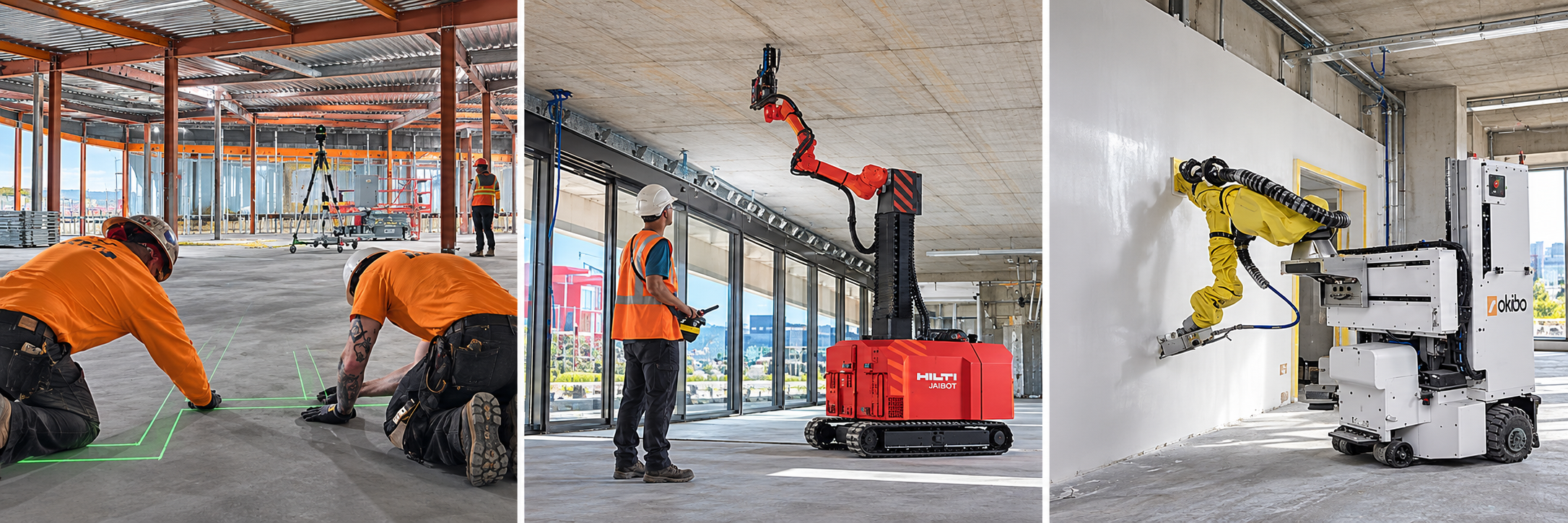
Robotics in construction has moved from experimental pilots to real jobsite deployment. Today, robots are laying out buildings, drilling overhead anchors, placing bricks, finishing interiors, moving earth, and verifying work against digital models.
This shift is not about replacing skilled labor. It is about addressing real challenges: labor shortages, rework, coordination errors, safety concerns, and increasing reliance on BIM and digital design.
This pillar guide explains what construction robotics is, the main robot categories, how they are used in practice, and how layout robotics — including LightYX — fits into the broader ecosystem.
What Is Construction Robotics?
Construction robotics refers to programmable, automated or semi-automated systems that perform or assist construction tasks using digital input.
Unlike factory robots, construction robots must operate in:
- Unstructured, changing environments
- Active jobsites with human crews
- Dust, vibration, and uneven surfaces
Because of this, construction robotics has evolved as a collection of task-specific systems, each designed to solve a particular high-impact problem.
Why Robotics Matters in Construction
The adoption of robotics is driven by structural industry pressures:
- Skilled labor shortages across trades
- High rework costs caused by layout and coordination errors
- Increasing project complexity
- Widespread adoption of BIM and coordinated models
- Greater focus on safety and ergonomics
Robotics helps reduce interpretation, increase consistency, and allow skilled workers to focus on higher-value work.
Core Categories of Construction Robotics
Construction robotics can be organized into distinct categories, aligned with different phases of construction.
1. Layout & Positioning Robots
Purpose: Translate digital design data into accurate physical reference on the jobsite.
Layout & positioning robots are often the first robotic systems adopted because layout errors propagate downstream into every trade.
These robots work directly from CAD or BIM data to establish reference geometry on slabs, walls, and ceilings — enabling accurate installation later.
What Layout Robots Do
- Establish points, lines, and elevations from digital models
- Align physical construction with coordinated design data
- Reduce layout time and rework
- Improve multi-trade coordination
Two Approaches to Robotic Layout
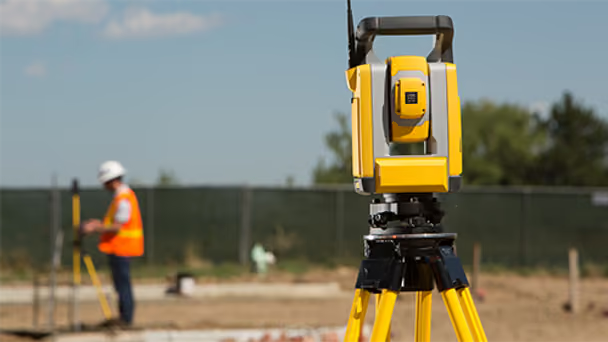
Robotic Laser Layout
Uses robotic instruments to place or guide individual layout points with high accuracy.
Example
- Trimble — Robotic total stations and model-driven layout tools https://construction.trimble.com
Full-Scale Visual Robotic Layout
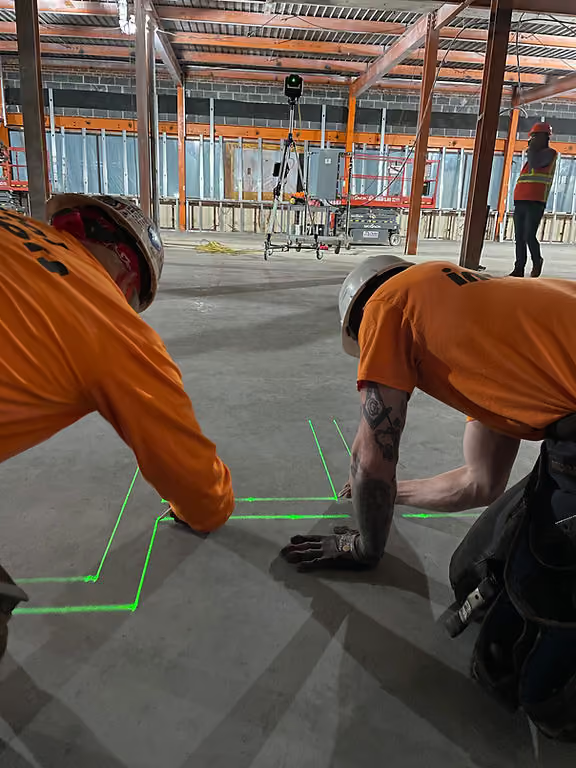
Projects the entire coordinated layout at full scale directly onto jobsite surfaces.
Instead of marking individual points, crews see walls, penetrations, hangers, openings, and trade elements exactly as designed.
Example
- LightYX — Full-scale laser-projected layout and verification
- https://www.lightyx.com/product
LightYX enables crews to:
- Work visually instead of interpreting drawings
- Coordinate multiple trades simultaneously
- Verify accuracy continuously during installation
Why Robotic Layout Scales
Layout robots:
- Improve accuracy without disrupting workflows
- Support drywall, MEP, framing, concrete, and prefab
- Serve as the foundation layer for other construction robots
2. Drilling, Anchoring Robots
Purpose: Automate repetitive, high-precision drilling and fastening tasks.
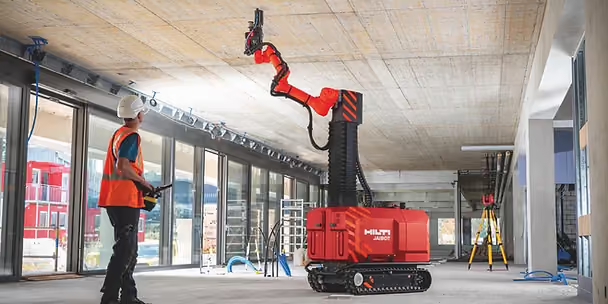
These robots are commonly used for overhead drilling for hangers and supports.
What These Robots Do
- Drill holes at exact locations and depths
- Install anchors, inserts, or supports
- Follow predefined digital paths
- Operate safely in overhead environments
These robots execute preparation work, not full installations.
Benefits
- Consistent placement
- Reduced physical strain
- Higher productivity
Example
- Hilti Jaibot — Robotic overhead drilling and anchor installation
- https://www.hilti.com
3. Robotic Installation Systems
Bricklaying, Flooring, and Repetitive Assembly
Purpose: Directly place building materials using automated systems.
Unlike layout or drilling robots, these systems execute installation work.
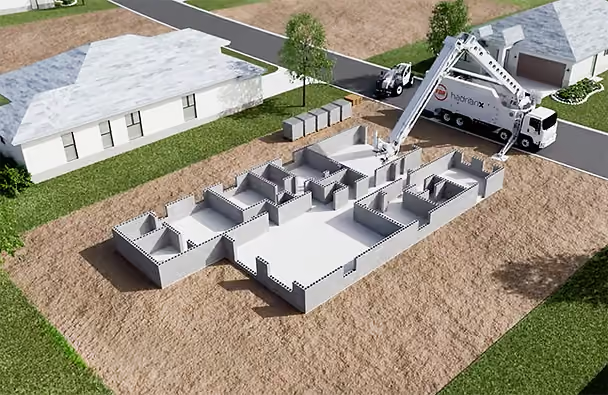
Bricklaying Robots
- Automated brick or block placement
- Consistent spacing and alignment
- High productivity in repetitive wall construction
Examples
- Construction Robotics — SAM (Semi-Automated Mason) https://www.constructionrobots.com
- FBR — Hadrian X autonomous bricklaying
- https://www.fbr.com.au
Robotic Flooring Installation
Flooring robots place tiles or panels in large, standardized spaces. Adoption is growing but remains selective due to material and surface variability.
4. Interior Finishing & Surface Robots
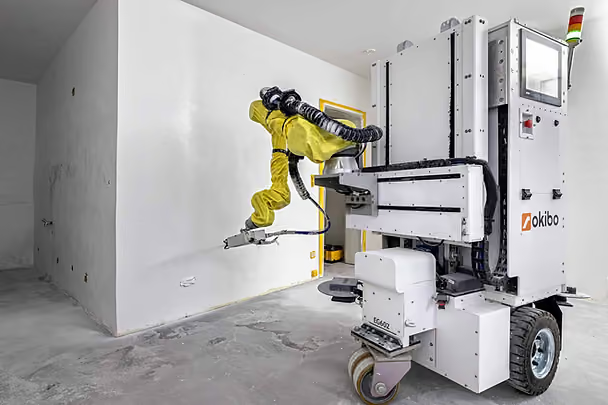
Purpose: Automate physically demanding finishing tasks.
Typical Applications
- Drywall finishing
- Sanding and plastering
- Surface preparation
Examples
- Okibohttps://okibo.com
- Baubothttps://www.baubot.com
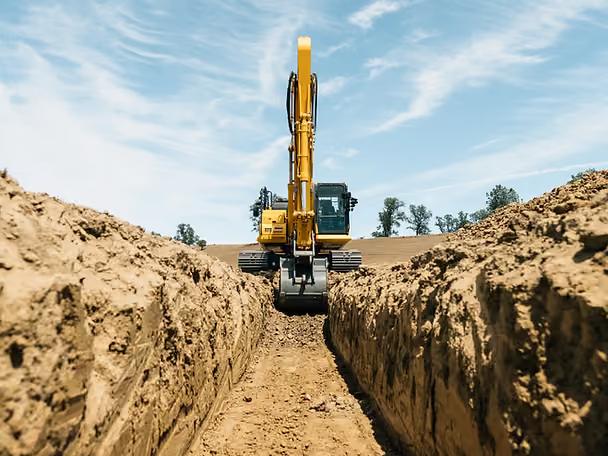
5. Earthmoving & Heavy Equipment Automation
Purpose: Automate excavation, grading, and site preparation.
Example
- Built Robotics
- https://www.builtrobotics.com
These systems operate mainly in outdoor, controlled environments.
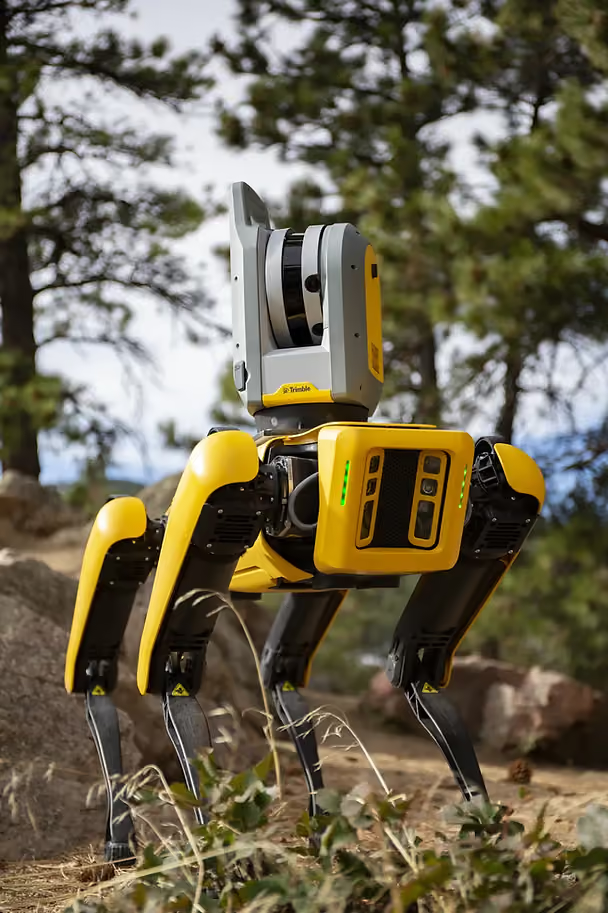
6. Inspection, Scanning & Verification Robots
Purpose: Capture as-built conditions and verify work against digital design.
Value
- Early detection of errors
- Faster QA/QC
- Better field-office coordination
Many layout systems now combine layout + verification in a single workflow.
Example
- Spot by Boston Dynamics
- https://bostondynamics.com/
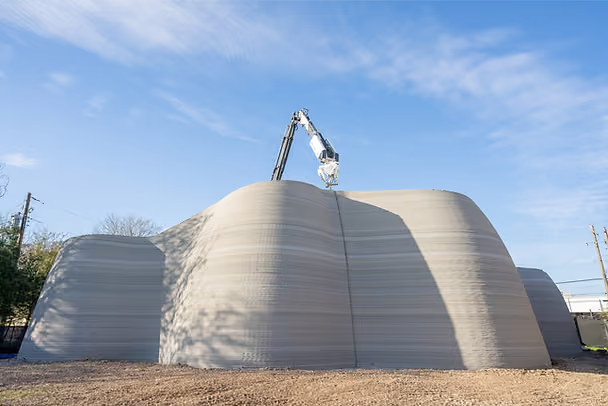
7. Material-Execution Robotics: 3D Construction Printing
3D construction printers are robotic systems, but they belong to a distinct sub-category.
Characteristics
- Gantry or robotic-arm based
- Automated material extrusion
- Operate from digital models
3D printing replaces entire construction steps, requires controlled conditions, and remains niche compared to field-assist robotics.
Example
- Spot by Boston Dynamic
- https://www.iconbuild.com
Focus: Residential and small commercial concrete construction Technology:
Gantry-based concrete extrusion Use cases:
- 3D-printed walls and shells
- Housing developments
- Disaster-relief and rapid housing projects
ICON is one of the most visible companies bringing large-scale 3D concrete printing into real construction programs.
Why BIM Is Central to Construction Robotics
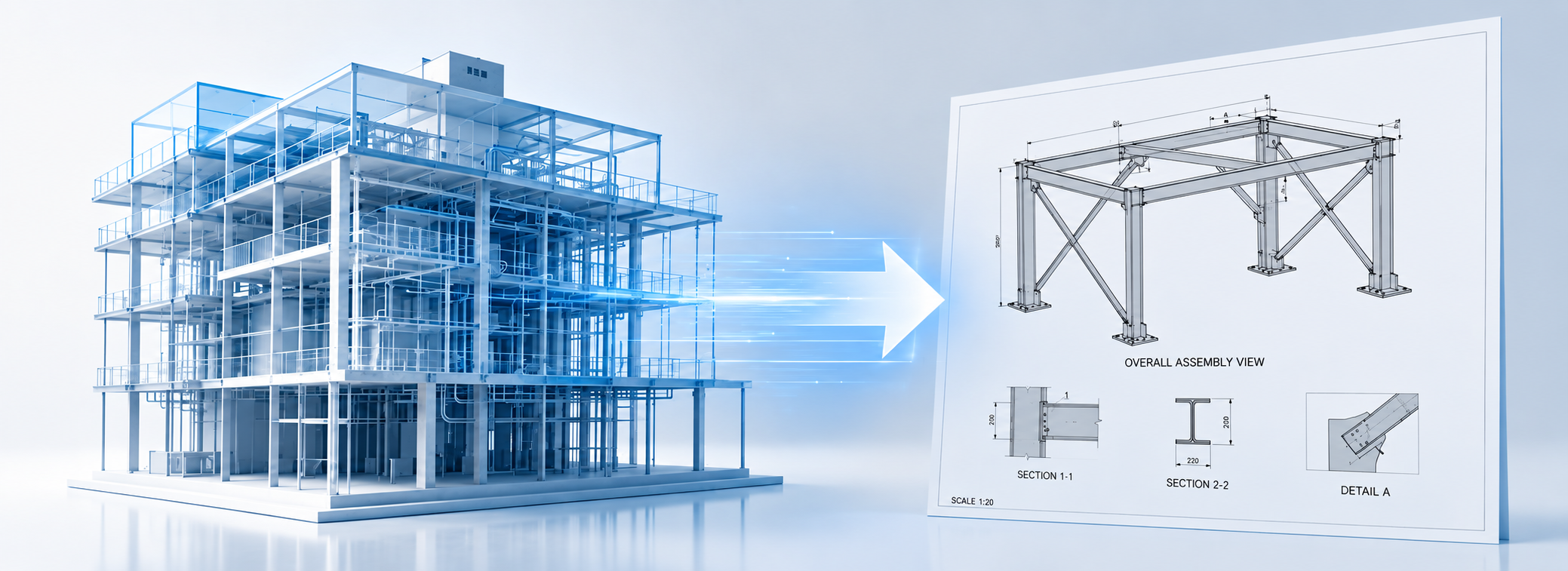
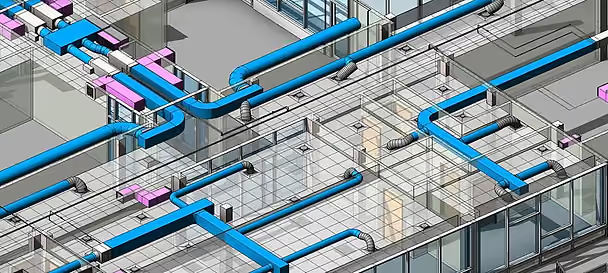
At a fundamental level, construction robotics is an execution layer for digital design.Robots do not interpret drawings the way humans do — they consume structured digital data and execute tasks deterministically.
This makes BIM (Building Information Modeling) and coordinated digital design the single most important prerequisite for successful robotics adoption.
Without accurate, coordinated models:
- Robots cannot reliably execute tasks
- Errors propagate faster, not slower
- Automation amplifies mistakes instead of eliminating them
Robots are only as effective as the digital data they receive.
BIM, coordinated trade models, and accurate shop drawings are the backbone of construction robotics.
How All Categories Work Together
A realistic robotic construction workflow looks like this:
- Layout robotics define geometry (Trimble, LightYX)
- Drilling robots prepare substrates
- Installation robots place materials
- Finishing robots refine surfaces
- Inspection robots verify execution
Typical Adoption Path in the Field
Most contractors adopt robotics in this order:
- Layout & verification robots
- Drilling and anchoring robots
- Finishing robots
- Installation robots (bricklaying, flooring)
- 3D printing for specific use cases
This reflects ROI clarity, flexibility, and risk tolerance.
Conclusion: Robotics as a Foundation of Modern Construction
Robotics in construction is no longer experimental. It is becoming foundational.
From layout and drilling to installation, finishing, and verification, robots reduce errors, improve safety, and increase productivity. When tied directly to digital design, they enable predictable, model-driven execution.
As construction continues to evolve, robotics will not replace skilled workers — it will amplify their impact and define how modern projects are delivered.
.png)