-Photoroom.avif)


The Evolution of Laser Layout Tools: From Basics to Cutting-Edge Technology
See how construction layout tools evolved from laser levels and total stations to robotic systems and full-scale digital projection.

Introduction
In the ever-evolving world of construction and surveying, precision is key. Laser layout tools have revolutionized the way professionals set up and verify layouts, replacing traditional methods with faster, more accurate solutions. This article explores the evolution of laser layout tools, their operation, pros and cons, and their diverse applications in the industry.
Understanding Laser Layout Tools
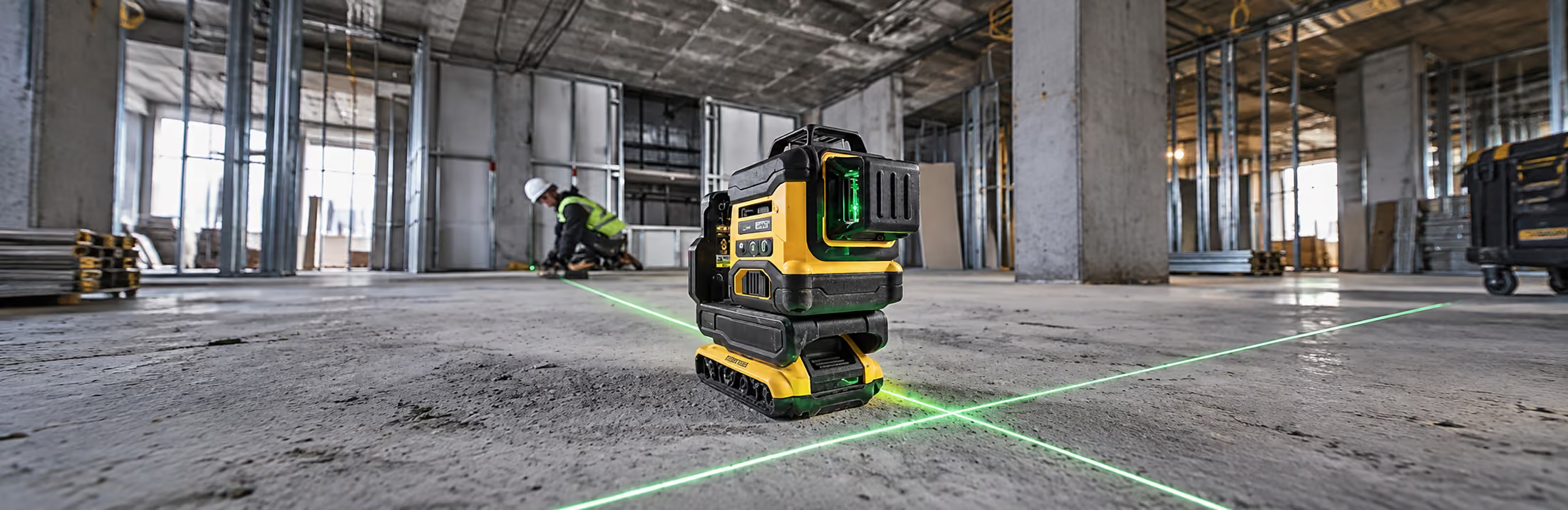
Laser layout tools use laser technology to project visible reference lines or points onto surfaces, enabling precise alignment and measurement. These tools come in various forms, each with unique functionalities and advantages. The most common categories include:
- Laser Levels
- Total Stations
- Robotic Total Stations
- Quick Marking Layout Tools
- Advanced Laser Layout Systems
1. Laser Levels
Laser levels are widely used for leveling and alignment tasks. These tools project a laser beam onto a surface, helping professionals ensure that surfaces, walls, or other construction elements are perfectly aligned.
Notable Manufacturers:
- DeWalt – Known for durable and high-performance laser levels.
- Bosch – Offers a range of self-leveling lasers with excellent accuracy.
- Leica – Provides high-precision laser leveling systems.
Pros:
- Affordable and easy to use
- Ideal for basic leveling and alignment tasks
- Portable and lightweight
Cons:
- Limited range compared to advanced systems
- Manual adjustments may be required
- Not suitable for highly complex layouts
2. Total Stations
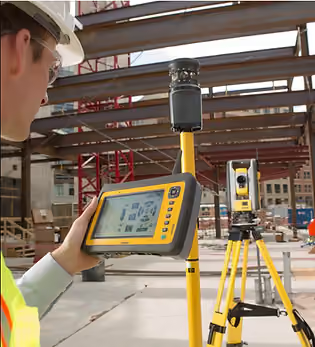
A total station is an advanced surveying instrument that integrates electronic distance measurement (EDM), angle measurement, and data processing capabilities. These tools are used for topographic surveys, site layout, and construction verification.
Notable Manufacturers:
- Topcon – High-quality total stations with excellent automation features.
- Trimble – Offers industry-leading total stations with GPS integration.
- Leica – Provides highly precise and durable total stations.
Pros:
- Highly accurate for distance and angle measurements
- Digital data storage and integration with design software
- Works for both vertical and horizontal layout
Cons:
- Requires skilled operators
- Setup and calibration take time
- Higher initial investment
What could full-scale laser projection do for your next project?
Let’s find out3. Robotic Total Stations
Robotic total stations take automation a step further. These instruments allow for one-person operation by using remote controls and tracking technology. They significantly reduce layout time while maintaining high accuracy.
Notable Manufacturers:
- Trimble – Known for advanced robotic total stations with automation features.
- Topcon – Offers robotic total stations with high-precision capabilities.
- Leica – Provides innovative robotic total station solutions.
Pros:
- One-person operation reduces labor costs
- Remote control operation enhances efficiency
- Extremely precise and reliable
Cons:
- Expensive compared to standard total stations
- Requires training for optimal use
- Vulnerable to signal obstructions in certain environments
4. Quick Marking Layout Tools
Quick marking layout tools, such as the QML800, provide fast and efficient marking solutions for construction layout. These tools use laser-guided technology to quickly establish layout points without requiring complex measurements or manual calculations.
Notable Features:
- QML800 – A layout tool designed for quick and accurate marking of single points.
Pros:
- Affordable
- Reduces layout errors
- Requires minimal training
Cons:
- Limited to specific applications
- Projects only one point
- Not as precise as total stations for large-scale projects
Your layout doesn’t stop at the floor. Project onto walls and ceilings, and adapt to as-built conditions.
Let’s talk about your project5. The Most Advanced: LightYX Laser Layout System
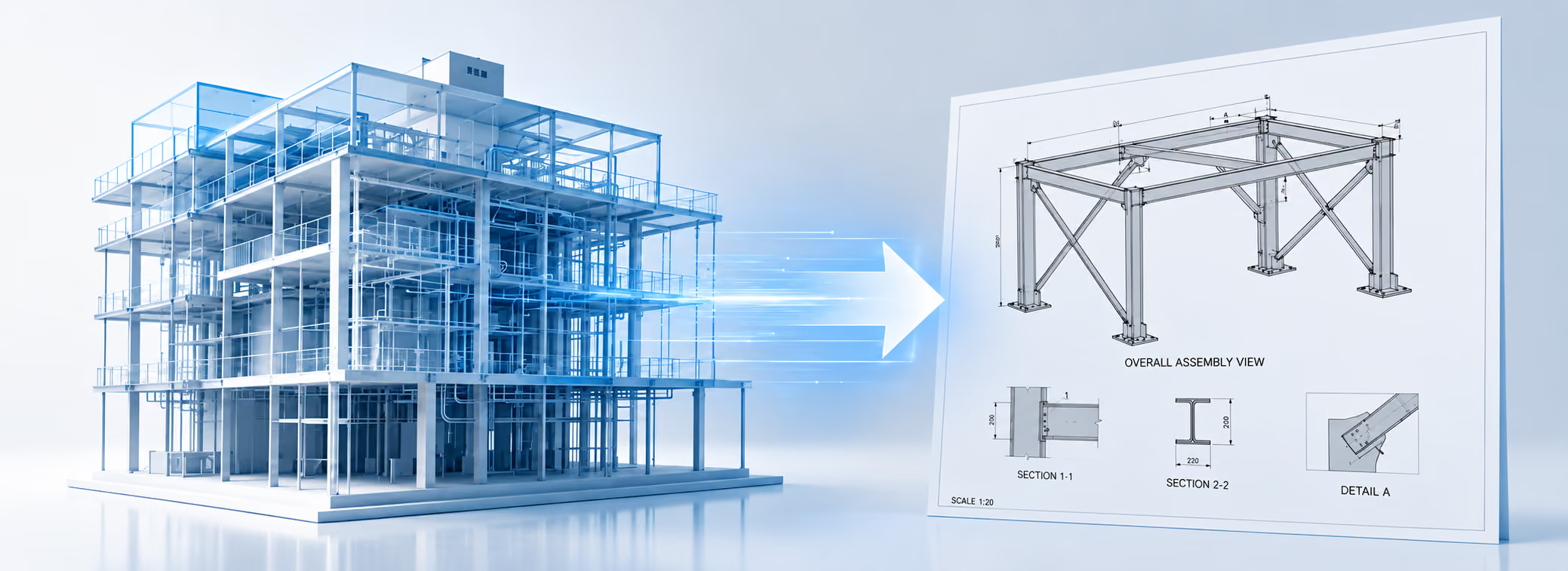
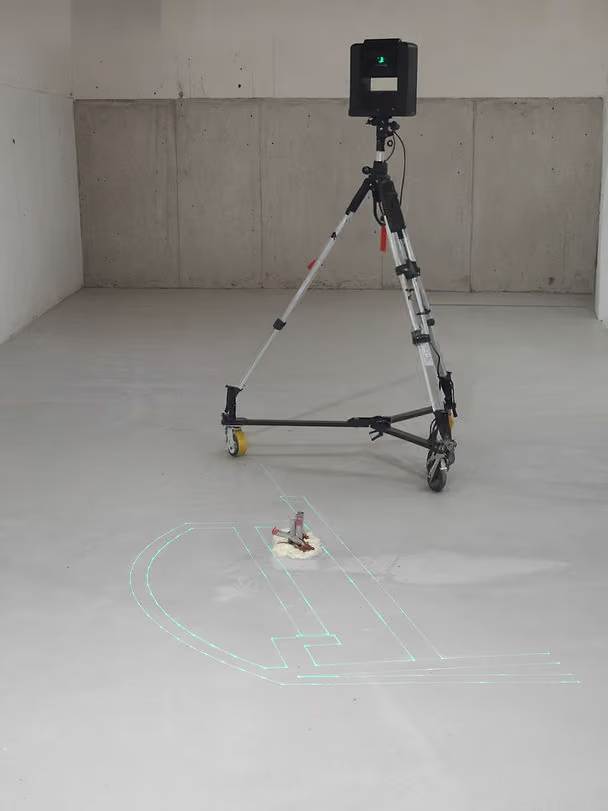
The latest advancement in laser layout technology is the LightYX laser layout system, which combines laser projection with digital automation. This system projects full-scale digital drawings onto surfaces, allowing construction teams to see exactly where elements should be placed.
Pros:
- 'What you see is what you build' approach eliminates interpretation errors
- Reduces layout time by up to 80%
- Integrates seamlessly with CAD and BIM (Building Information Modeling)
- Can perform 3D scanning for quality assurance
Cons:
- Higher cost
- Requires initial training
- Works best on hard surfaces and indoors due to laser visibility
The Evolution of Laser Layout Tools
The journey of laser layout tools has been remarkable, progressing from simple spirit levels to sophisticated digital projection systems.
- Early Days: Manual levels and string lines dominated construction sites.
- Introduction of Laser Levels: Simple line lasers improved efficiency.
- Advent of Total Stations: Enabled precise distance and angle measurement.
- Robotic Total Stations: Allowed automation and remote operation.
- Modern Digital Projection Systems: LightYX and similar innovations push the boundaries with fully automated layout tools.
Conclusion
Laser layout tools have transformed the construction and surveying industries by enhancing precision, efficiency, and automation. Whether using basic laser levels or cutting-edge solutions like LightYX, these tools help professionals reduce errors, save time, and improve project outcomes. As technology advances, laser layout systems will continue to shape the future of construction, making layout work faster, more accurate, and increasingly automated.
Are you ready to upgrade your layout process? Explore how LightYX can revolutionize your workflow today!
.avif)