
-Photoroom.avif)


Ceilings and soffits are where coordination gets hardest. Congested MEP zones, changing ceiling heights, and architectural details make traditional layout slow and error-prone. Small mistakes overhead often lead to rework, delays, and costly field adjustments.
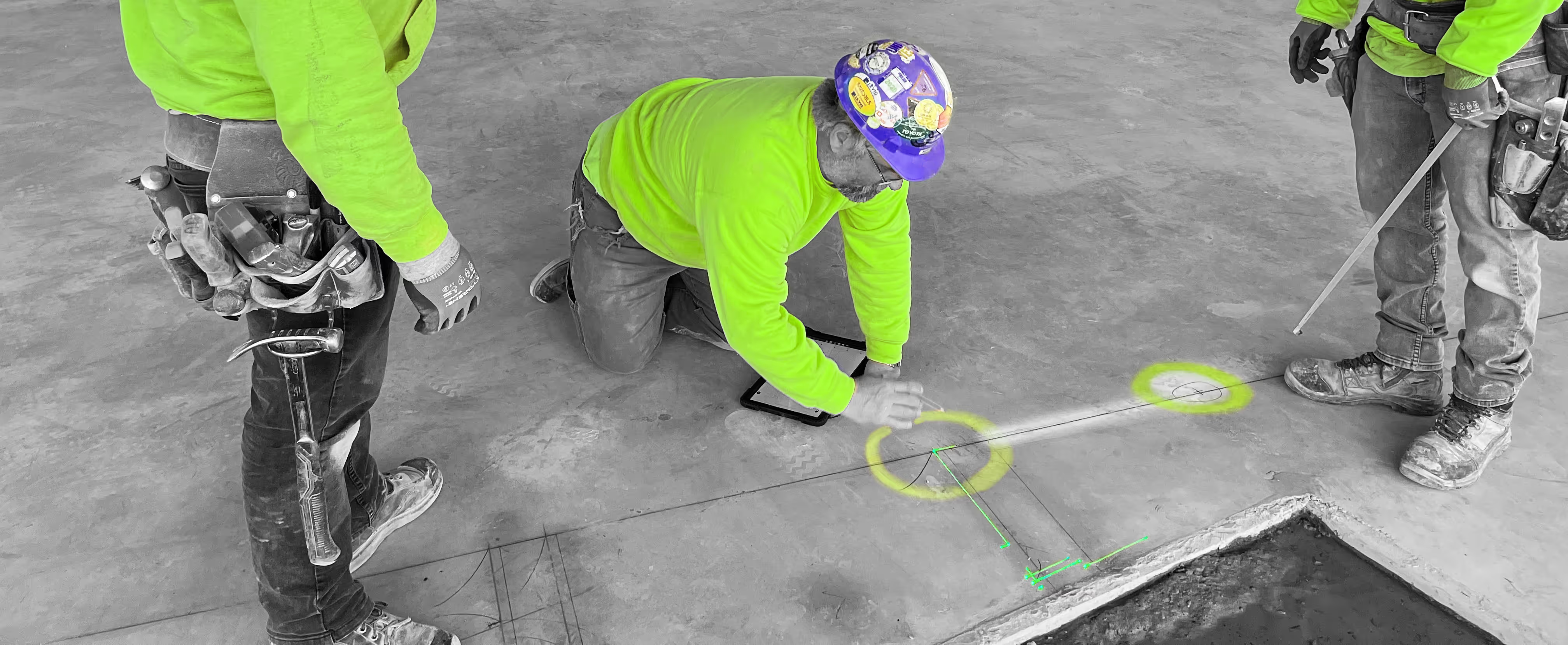
With LightYX, coordinated CAD or BIM models are projected directly onto floor and ceiling surfaces, giving crews clear, visual guidance they can build from immediately. No tape measures. No string lines. No guesswork. Whether you’re laying out ceiling grids, soffits, bulkheads, or architectural features, LightYX turns digital design into full-scale, on-site layout — helping teams move faster while building exactly to plan.
What LightYX Does for Ceilings & Soffits
LightYX enables confident ceiling and soffit layout from day one by projecting:
- Ceiling Grid & Main Runner Paths: Precision lines for fast tee and perimeter channel installs.
- Soffit & Bulkhead Framing: Full-scale footprints for complex vertical transitions and drops.
- Hanger & Attachment Locations: Direct marks on the deck to eliminate manual measuring for threaded rods.
- Light Fixture & HVAC Diffuser Cutouts: Exact positioning to ensure zero clashing with MEP.
- Architectural Features & Clouds: Complex curves and geometric patterns laid out in seconds.
- Height Elevation Changes: Visual cues for varying deck heights and stepped designs.
- Furring & Leveling References: Accurate marks for wall-to-ceiling transitions.
All projected directly where crews work — on floors and ceilings — so installation starts immediately with clarity.
Why Ceiling & Interior Framing Contractors Choose LightYX
- Start Building Sooner – Instant laser layout replaces manual measuring and string lines.
- Improve Accuracy Across Trades – Keeps ceilings aligned with drywall, steel framing, and MEP systems.
- Handle Complex Geometry with Ease – Simplifies stepped ceilings, offsets, and architectural details.
- Project on Floors and Ceilings – Enables precise overhead layout in congested environments.
- Scale Easily on Repetitive Projects – Delivers consistent, model-based layout on every level.
How It Works
- Sync: Import your coordinated CAD or BIM files directly into the platform.
- Align: Quickly lock the LightYX laser to your jobsite control points.
- Project: Cast 1:1 scale layouts for ceilings, soffits, and hangers onto the work surface.
- Build: Crews follow the visual guide—no manual measuring or interpretation required.
- Verify: Eliminate coordination errors and rework before the first stud is even placed.
Simple, visual, and engineered for the reality of the jobsite.

Built for Commercial Ceilings & Architectural Framing
LightYX supports steel framing workflows across office and tenant improvement projects, multifamily and mixed-use buildings, healthcare and education facilities, and hospitality and retail interiors.
Anywhere light-gauge steel meets tight schedules and complex coordination, LightYX helps teams deliver faster with higher confidence.
Get started with LightYX Steel Framing Layout — turn coordinated drawings into clear, actionable steel layout on floors and ceilings so your crews build right the first time.
Speed Up Ceiling Layout
CONTACT US






FAQ
How does LightYX speed up ceiling and soffit layout?

LightYX projects ceiling grids, soffit footprints, bulkhead framing, hanger points, fixture openings, diffuser locations, architectural clouds, and elevation changes directly onto the work surface. This reduces manual overhead measuring, string lines, and repeated point transfers.
Why are ceilings and soffits difficult to lay out manually?
Ceiling and soffit layout is often slow because crews must coordinate overhead conditions, congested MEP zones, changing ceiling heights, stepped designs, and architectural details. Small layout mistakes overhead can cause major rework during installation.
How does LightYX help coordinate ceilings with MEP systems?
LightYX projects coordinated BIM layout directly on ceilings, decks, or floors, helping teams see hanger points, diffuser openings, light fixtures, soffits, and MEP clearances before installation. This improves coordination between ceiling, framing, HVAC, electrical, and plumbing trades.
How does LightYX improve layout for complex soffits, bulkheads, and architectural ceilings?
Complex soffits and architectural ceilings often include curves, offsets, drops, transitions, and patterns that are hard to transfer manually. LightYX projects these shapes at full scale, giving crews a clear visual guide for installation.
How can contractors reduce rework in overhead layout and installation?
Contractors can reduce overhead rework by projecting coordinated ceiling and soffit layouts before installation starts. Crews can verify locations, clearances, and alignment early instead of discovering issues after framing, hangers, or ceiling systems are installed.

