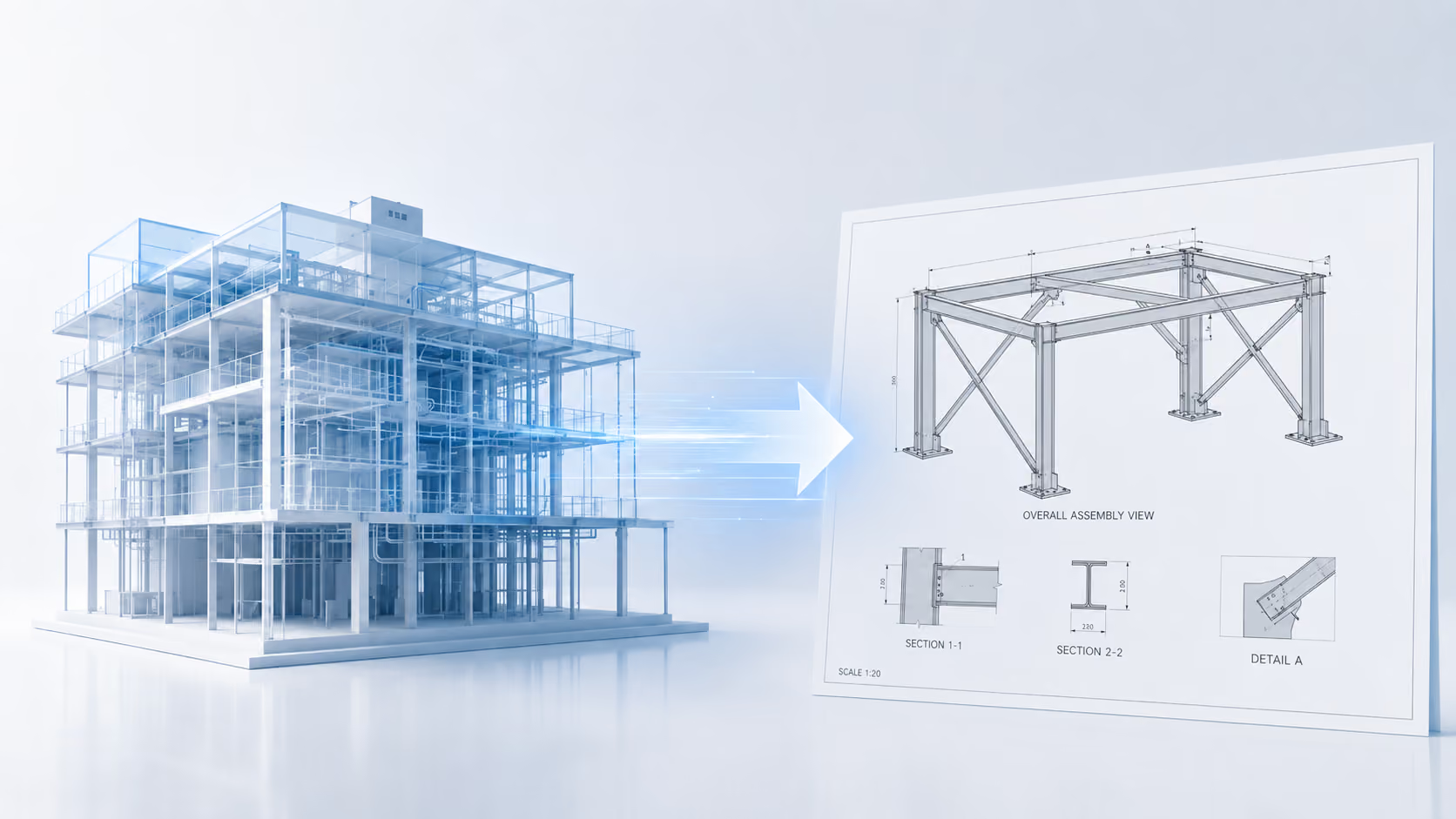
-Photoroom.avif)


Laser Layout : Transforming Construction through BIM-to-Field Workflows
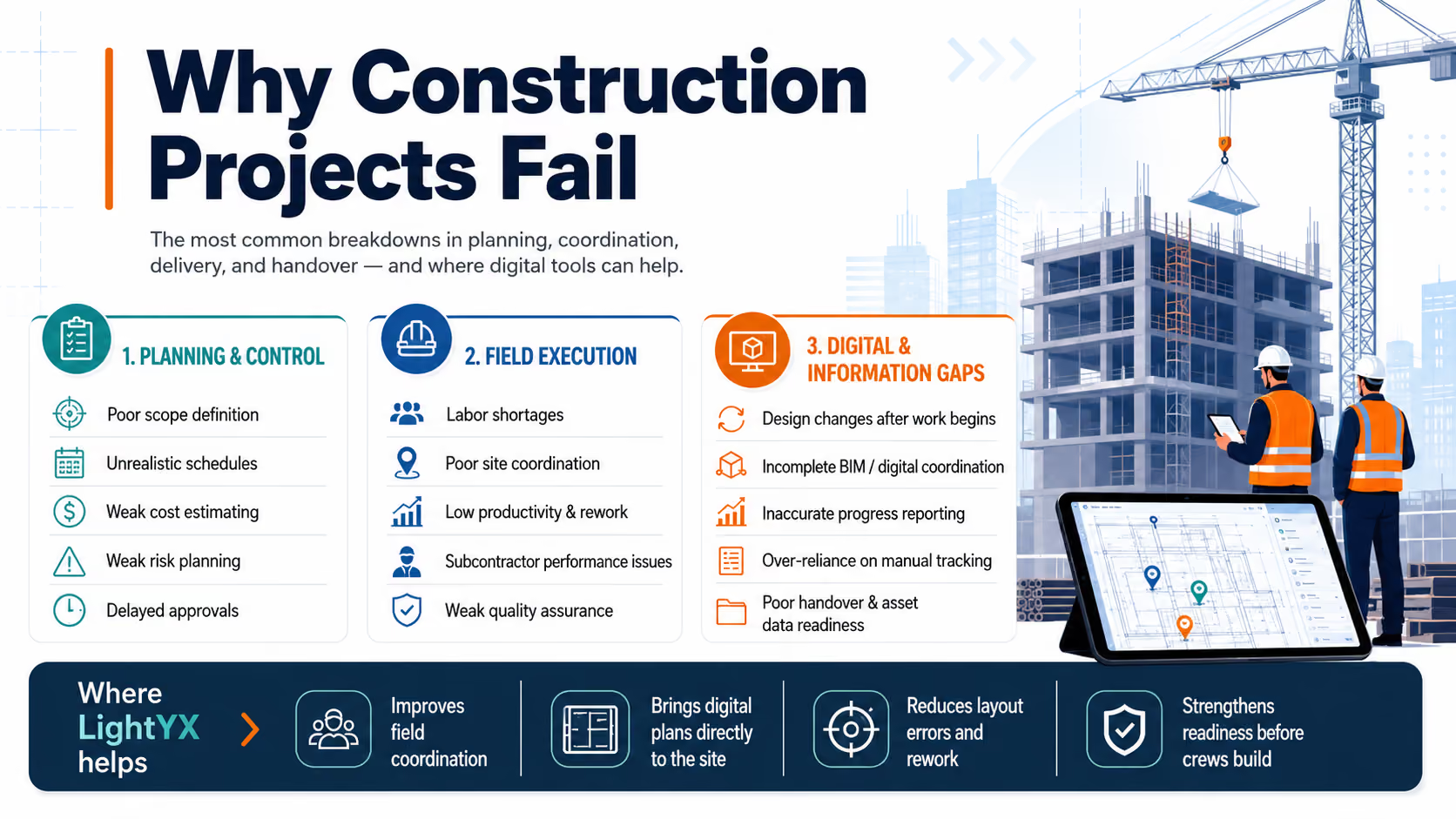
The construction industry has long struggled with a "productivity gap" — a persistent disconnect between the precision of architectural design and the reality of on-site execution.

For decades, the primary bridge between these two worlds was a set of 2D paper drawings, a tape measure, and a chalk line. The emergence of Building Information Modeling (BIM) has fundamentally shifted that paradigm.
BIM is not merely a 3D modeling tool; it is a comprehensive methodology for managing project data across the entire project lifecycle. Its true value is realized when the digital model leaves the office and enters the field. This "BIM-to-Field" workflow replaces manual interpretation with digital precision, ensuring that what gets built is an exact reflection of what was designed.
The Evolution of Layout: From Manual to Digital
The traditional layout process is inherently susceptible to human error. A surveyor or foreman must manually translate coordinates from a 2D plan onto a physical floor or wall. Even a minor deviation of a few millimeters can cascade into significant structural clashes or MEP (Mechanical, Electrical, and Plumbing) alignment issues later in the project.
Digital layout tools have transformed this phase by creating a direct link between the BIM model and the job site. These technologies allow a single operator to achieve higher accuracy in a fraction of the time required by a traditional three-person crew.
Case Study in Innovation: LightYX Laser Layout
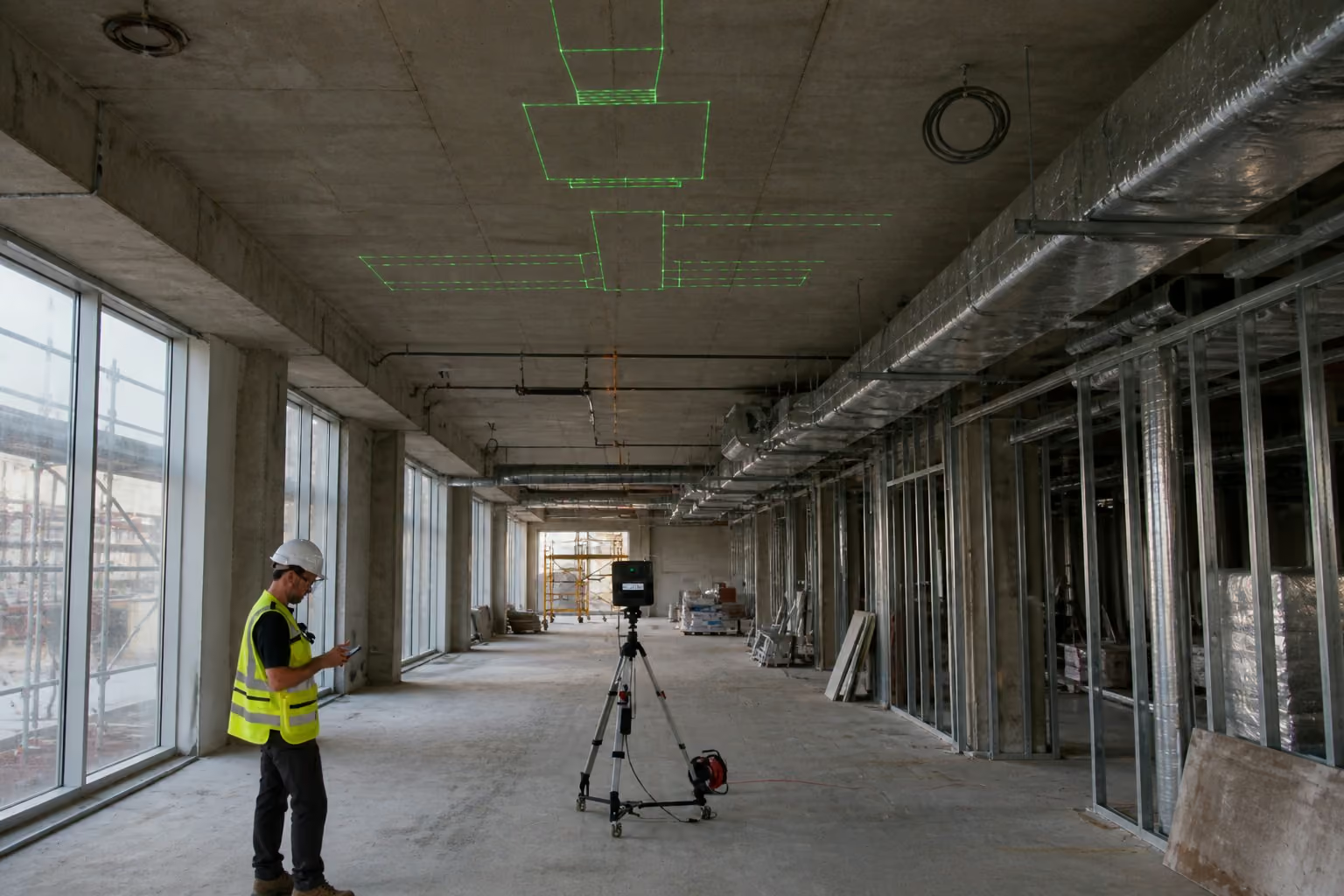
A prime example of this digital evolution is the LightYX laser layout system. Unlike traditional methods that require physical marking or printing, it uses high-precision laser projection to overlay digital blueprints directly onto construction surfaces.
- Real-time projection: It projects the exact lines for walls, electrical outlets, and ductwork directly onto the floor or ceiling.
- High accuracy: By combining computer vision and laser technology, it helps layouts meet strict design tolerances without the drift associated with manual string lines.
- Dynamic adaptation: When the digital model is updated in the office, the projection on-site can be refreshed instantly — so the field team is never working off outdated information.
The Role of the Common Data Environment (CDE)
For digital layout tools like LightYX to function effectively, there must be a "single source of truth." That is the role of the Common Data Environment (CDE) — a centralized digital hub where all project stakeholders (architects, engineers, and contractors) upload and verify their data.
Key Benefits of a CDE
- Version control: Ensures the field team is always using the most recent "published" version of the model.
- Audit trails: Every change is tracked, providing accountability for design modifications.
- Interoperability: Disparate hardware tools can pull data from a unified, cloud-based model (e.g., BIM 360 or Revizto).
Implementation Through the BIM Execution Plan (BEP)
A successful BIM-to-Field transition does not happen by accident — it must be codified in the BIM Execution Plan (BEP). This document serves as the roadmap for how digital tools will be used on a specific project.
To integrate digital layout into a BEP, three things should be defined:
- Hardware selection: Specifying the use of total stations or laser projection systems such as the LightYX BeamerOne.
- Information exchange (IE): Determining how frequently model updates are pushed to field devices.
- Level of Development (LOD): Ensuring the model carries enough detail — typically LOD 350 or 400 — for accurate field installation.
ROI and the Impact on Project Outcomes
The financial argument for moving away from manual hardware is compelling. By reducing reliance on labor-intensive manual measurements, contractors can mitigate the risk of "clashes" — where two components, such as a water pipe and a structural beam, are designed to occupy the same space.
Identifying these issues in the digital model and projecting the correct paths on-site can save thousands of dollars in demolition and reconstruction costs. Some industry analyses point to a return on investment exceeding 500% for projects that adopt digital layout and BIM-to-Field workflows.
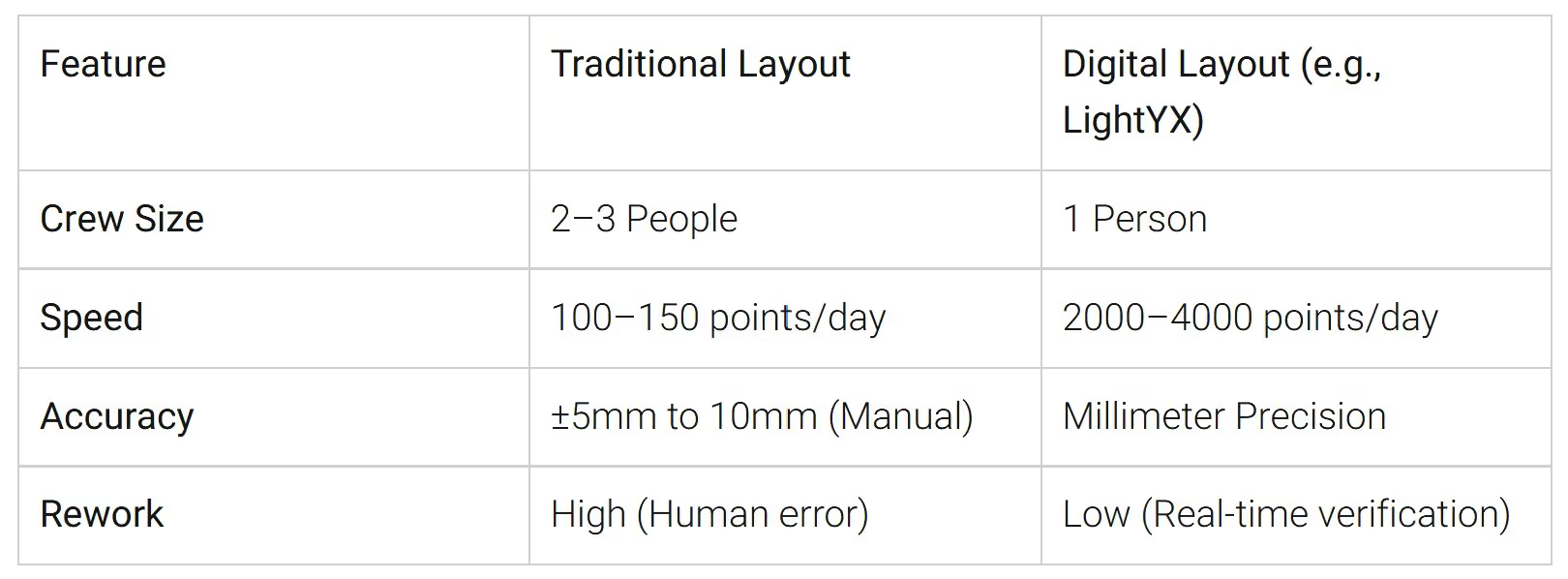
By reducing the reliance on labor-intensive manual measurements, contractors can mitigate the risks of "clashes"—where two components, such as a water pipe and a structural beam, are designed to occupy the same space. Identifying these issues in the digital model and projecting the correct paths on-site saves thousands of dollars in demolition and reconstruction costs.
Conclusion
The shift toward a fully digital job site is no longer a luxury reserved for high-end projects; it is becoming a baseline requirement for staying competitive. Tools like the LightYX laser layout system represent the future of BIM-to-Field — where the boundary between the digital model and the physical structure becomes nearly invisible.
By embracing these technologies, the construction industry can finally close the productivity gap, delivering safer, faster, and more accurate buildings.
See more here : LightYX Laser Layout in Action
This video provides a visual demonstration of how laser projection technology transforms digital plans into accurate physical layouts on a construction site.